
A lot of learners exit Geography exams with a lot of hope, only to be crushed by the findings. They frequently think that they have read enough, they have gone through the syllabus and have memorized all the significant issues. So where did things go wrong?
The reality is that it is hardly likely to lose marks in Geography due to a lack of effort. Rather, it is usually reduced to some underlying errors in perception, answer methods, and test plan. These problems can cause a massive performance gap that could be identified.
Memorization Without Understanding
Overdependence on memorization is one of the largest, though secretive issues. Geography is not only about knowing the definitions or case studies, but also about knowing the relationship between various concepts.
Considering an example, students can learn the causes of flooding by heart, yet fail to describe the interaction of the causes in real life. Examiners are not only after facts; they desire to have clear reasonings and logic explanations.
Students tend to give shallow answers when they are all about memorisation. This will result in poor marks, although the material might appear right on the surface.
Misinterpreting the Question
The other common cause of students losing marks is the wrong question or a misunderstanding of the question. The command words that feature in the questions of the Geography examination tend to be:
- Describe
- Explain
- Compare
- Evaluate
These all demand a varying form of response. As an example, the concept of describe gives emphasis on what is occurring, whereas the concept of explain demands justifications and procedures.
Most students provide elaborate responses, and they do not fit into the question. Due to this, they lose marks not due to their lack of knowledge of the topic, but due to the fact that they have given the wrong answers.
Weak Answer Structure
A bad structure of answers may lose important marks even where students have the knowledge of the subject. The geography answers should be clear, logical and structured.
A strong answer usually includes:
- A clear point
- Supporting explanation
- Relevant example or case study
In the absence of such a structure, the responses may turn generic or muddled. Examiners will have problems with determining key points, resulting in low scores.
The practice of structured writing leads to better performance of students since their answers are easier to read and are convincing.
Lack of Case Study Application
Case studies are very instrumental in Geography exams, and most students fail to utilise them well. Other students study case studies without being aware of when and how to use them. The others refer to them in a general manner, shorthandedly.
Examiners are seeking exact and applicable illustrations that substantiate the response. It is not just enough to mention the case study, but it has to be connected to the question.
As an example, students ought not to name a place, but they need to provide certain data, effects, or consequences that reinforce their answer.
Poor Map and Data Skills
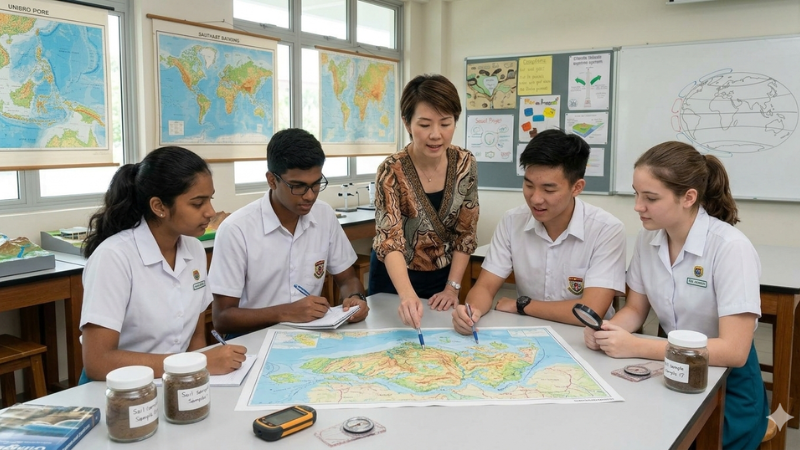
Geography is not only a theoretical study. Another part of it is the interpretation of maps, data, and graphs. This is an aspect which many students do not consider during preparation.
Questions on map reading during exams are to be handled with a lot of attention to detail. Students should be able to recognise patterns, trends, and relationships correctly. Even minor errors in interpretation may result in wrong responses.
These skills need constant practice to improve. Those students who can get used to maps and data analysis have a definite advantage in examinations.
Ignoring Feedback and Mistakes
The other secret cause of score loss is not learning from previous errors. A lot of the students fill in practice papers and fail to revise their mistakes.
They will not know which mistakes occurred, and thus they will most likely repeat these mistakes in the real test. Feedback is crucial to improvement. It assists students in areas of weakness and polishes their answers.
This is where guided learning, such as O level geography tuition, can make a difference by providing targeted feedback and helping students improve their performance step by step.
Time Management Issues
The pressure of time is also one of the problems with Geography exams. Students tend to waste a lot of time taking the question and hurry through others.
Poor time management can result in:
- Incomplete answers
- Lack of detail in later questions
- Increased stress during the exam
Timed condition practices will assist students learn to have a better understanding of the duration to be taken on individual questions. They get to know through experience how to strike a balance between speed and accuracy.
Overlooking Keywords and Mark Allocation
Each exam question has its own number of marks, and this gives a good indication of the amount of detail that is necessary.
For example:
- A 2-mark question needs a brief answer
- A 6-mark question requires explanation and development
Students usually disregard this, and they write too much or too little. There is no point in using a long answer when writing a long answer to a low-mark question would result in wastage of time, whereas giving a short answer to a high-mark question would result in loss of marks.
Mark allocation can be paid attention to allow the students to make their responses more effective.
Lack of Consistent Practice
In Geography, consistency is a major success factor. There are those students who study extremely in the lead-up to exams and fail to practice on a regular basis all year round.
Geography must be revised, practised, and reinforced. Constant study allows students to have better information and gain confidence over time.
Regular practice of students makes them more conversant with question patterns and makes them feel better prepared during examinations.
Fix the Hidden Problems, Improve Your Results
It does not necessarily involve losing marks in Geography because the amount of study you put in it is more about the level of study and application of your knowledge. There are underlying problems of poor comprehension, ineffective responses, and insufficient practice that may have a huge effect on performance.
The best thing is that these issues are resolvable. The concentration on the concepts, practising the organised answers, mastering maps, and learning through mistakes will help the students observe a significant improvement in the results.
Geography is a matter of success, and it is achieved as a result of knowledge, plan, and hard work. When students overcome these problems in the background, they are in a better position to record grades that they are targeting.