
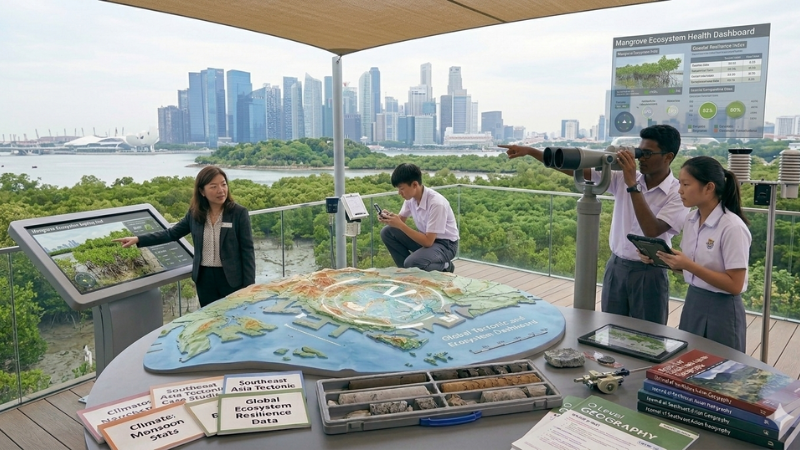
Geography at the Junior College level is an academically challenging subject that requires students to learn intricate theories, interpret geographical information, and use real-life examples in analysis essays. In comparison to the previous education levels, JC Geography puts a lot of emphasis on critical thinking, evaluation, and facilitation of linkages between a variety of concepts in both physical and human geography. Due to the level of academic work, most students are unable to follow the speed and intensity of the syllabus.
Formal learning is very instrumental in assisting students to deal with these challenges. In case learning is systematized, the students will be able to comprehend the material better, retain the information longer, and use their knowledge effectively in the exams. Having adequate guidance and a well laid out learning strategy will enable the students to build up on their knowledge and be better in the subject. For many students, JC Geography Tuition provides the structured approach needed to master the subject.
Understanding the Complexity of JC Geography
JC Geography is broadly based, but with topics that discuss the interaction of human beings and the environment. Students are taught the existence of climatic regimes, city formation, environmental sustainability and the geographical patterns of the world. Every subject needs comprehensive knowledge and skills to analyze the way various geographical processes interrelate with each other.
Students find it difficult to cope with a huge volume of material in the subject which is one of the primary causes of their problems. The absence of a systematic method may make the process of organizing information and relating various ideas rather challenging. Students might not fully grasp how to apply facts in the larger geographical context and they end up memorising them. This can be done with the help of a systematic approach to learning as it is easy to break such topics into manageable parts and students can easily absorb complicated information.
Building Strong Conceptual Foundations
Structured learning is based on the need to construct sound theoretical principles and then proceed to superior applications. In geography, we must know the fundamental principles of geographical processes to have answers to the advanced questions. By having a clear knowledge of the causes and effects of geographical phenomena the students would be in a position to use their knowledge in a more effective manner when dealing with essays and data analysis questions.
Students with good conceptual knowledge will be in a position to deal with the unknown exam questions. They are able to apply logical reasoning to describe the explanation of geographical patterns and processes instead of using memorized information only. This insight goes further to enhance exam results as well as create a more interesting and meaningful subject.
Improving Essay Writing and Analytical Skills
Writing essays is one of the major aspects of the JC Geography exams. The students will have to outline coherent points, explain their ideas with examples and prove their critical thinking over the issues of geography. Nevertheless, a considerable number of students cannot organize their papers and express their ideas properly when they have to write exam papers.
Structured learning method is used to help students learn how to organize their essays well. They get to know on how to present a subject matter, argue out strong points, make supporting points, and give balanced analysis in the conclusions. With practice and feedback, the students will slowly build confidence and skills of writing good quality essays.
The structure practice also aids in perfecting the students to scrutinize their analytical skill. Geography involves students to be able to interpret maps, graphs and any other type of geographical information. The more they engage in these skills, the more the students will be at ease in recognizing patterns and describing the connection among various geographical variables.
Managing Case Studies More Effectively
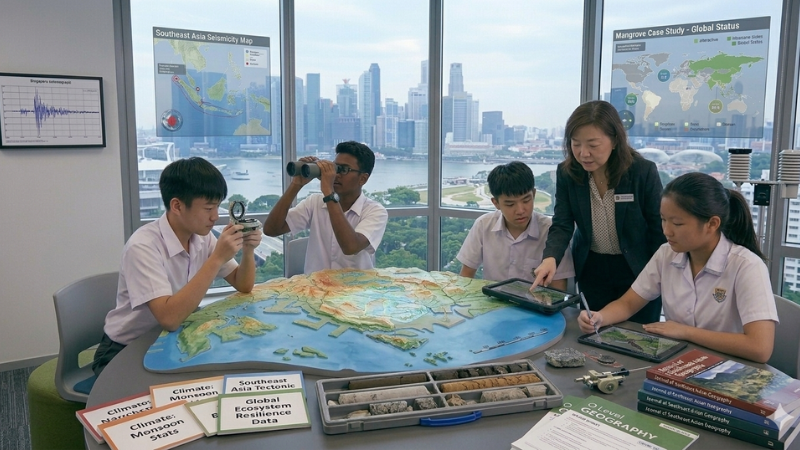
JC Geography Case studies form a significant aspect of the subject as they give practical examples that are used to explain geographical concepts. This is because students are supposed to use the appropriate case studies in their essays to prove their points and show their further insight.
A typical problem which the students encounter is that they should remember a number of case studies and when such studies are to be utilized. Simplified learning enables the students to pay attention to the most significant points in every case study. They do not know all the stuff by heart, but they know how to recognize the more important facts that would be applicable to various questions and subjects.
As they get revised and practiced, the student will tend to become more sure of the way he/she incorporates case studies into the answer. This enhances their credibility and the quality of their essays.
Building Confidence for Exams
Confidence is an important factor in performance. Even students who are knowledgeable in the same sometimes find it difficult during examinations due to being unprepared or overwhelmed. Organized learning enables the students to build confidence since they have well cut-out plans when handling various questions.
Practice and constructive feedback will help the students know how to be time conscious when they are taking an exam and how to compose their answers in a well-organized way. The anxiety can also be minimized by being familiar with exam-style questions and the students will be able to concentrate on portraying their knowledge.
Students are able to feel more confident and clearer about exams as they continue to gain more experience in applying their knowledge to different contexts.
Long-Term Benefits of Structured Learning
Formal learning is not only good in enhancing exam performance. It assists students to acquire good academic skills which include critical thinking, analytical reasoning and effective communication. These are the skills that are applicable not just in geography, but in most other fields of study and in most future careers.
Even the subject of geography makes students start thinking about all these problems of the world like climate change and urbanization, and sustainable development. With the ability to learn these issues in a structured manner, students will have a better appreciation of how the knowledge of geography can be used in real life conditions.
The challenges that come with the subject can be overcome gradually with proper training, proper explanation, and systematic methods of study. For many learners, JC Geography Tuition provides the structured guidance needed to strengthen their understanding and improve their academic performance.
Finally, the systematic learning will make geography not a difficult subject but a source of intellectual development. Through the proper strategy, effort, and resources, students would be able to acquire knowledge and skills to be successful in JC Geography and attain successful academic results in the long-term.