
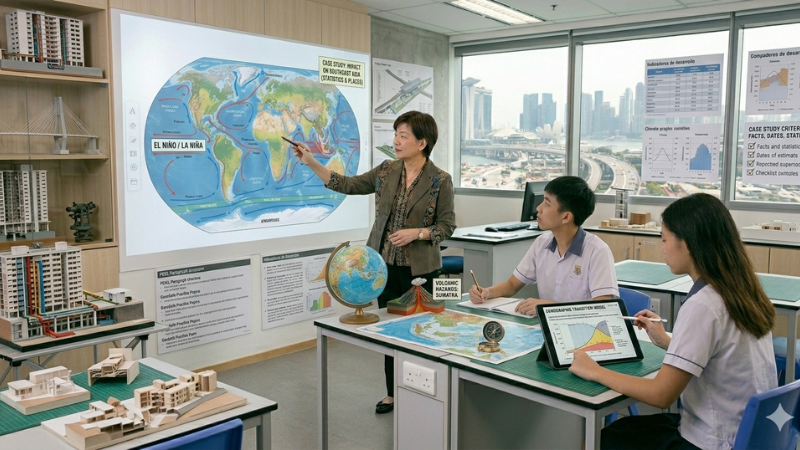
Geography at the secondary level cannot be learned through mere memorisation. Students are supposed to interpret data and assess real life issues. With rising academic demands students find it difficult to keep up with the rigour and format required in examinations.
This is why Secondary Geography Tuition has become an increasingly valuable support system for students aiming to improve their understanding and examination performance. Students can attain clarity and skills by being guided with special attention and receiving a guided preparation to shine.
Building a Strong Foundation in Complex Topics
The set of themes in Secondary Geography is extensive and includes demanding topics such as tectonic processes, climate systems, urbanisation, population trends, and sustainable development. These subjects are interrelated and tend to be abstract and therefore, they need conceptual learning and not superficial memorisation.
The time constraint is a common problem in a normal classroom setting, which may prevent deeper re-exploration of difficult concepts. Tuition gives students the chance to break down hard subjects into small units. The explanation of the concepts follows gradually and is supported by the corresponding examples and clear illustrations. Students are in a better position to apply the knowledge in examinations when they actually know how processes work and why.
The powerful conceptual basis will minimise misinterpretations and enhance the ability to retain information over time, thereby improving the efficiency of the revision process and reducing stress levels.
Mastering Examination Techniques
Answering technique is one of the greatest challenges students face, rather than knowledge of the content. Geography tests interpretations, explanations, comparison and evaluations. Scoring well requires an understanding of the difference between command words like describe explain and assess.
In the systematic practice, students are taught to structure their answers in a logical, clear way. They are also trained to come up with responses that flow well, with each point backed by relevant evidence. Tips on time management are also highlighted to enable students to produce their papers with confidence and within the stipulated period.
This exam-focused approach is a key reason why Secondary Geography Tuition contributes significantly to measurable grade improvement.
Strengthening Case Study Application
Most Geography examination questions are based on case studies. Students have to remember specific examples, combine relevant statistics, and connect them to the given question in a clear manner. Nonetheless, most students find it hard to deal with unclear references or incomplete explanations, hence missing marks.
Guided tuition ensures that students develop a bank of reliable case studies. They do not memorise random facts they learn to organise information so it can be reorganised to fit various types of questions. They weave examples into their essays as part of their natural practice to demonstrate their level of knowledge and application skills.
Via repetition and systematic reinforcement the students will be more likely to use the case studies correctly and productively.
Improving Data Interpretation and Analytical Skills
Geography tests often use maps and statistical tables. Students are supposed to draw patterns, identify trends, and describe connections between variables. In the absence of suitable instructions, interpreting such data may seem overwhelming.
Tuition gives specific training in the analysis of various types of data presentation. Students are taught how to identify major trends quickly and how to transform observations into a written description. They also come to associate the interpretation of data directly with larger geographical ideas.
In the long run, such a uniform discipline builds analytical thinking skills, which are useful not only in Geography but also in other humanities subjects.
Personalised Attention and Targeted Support
Learning requirements vary by student. Some might be weak in physical geography like weather systems whilst others are weak in essay writing or the evaluation questions. In a larger classroom setup, it may be challenging to address each case issue in detail.
Tuition provides a more narrow environment in which one can pinpoint specific areas of weakness and work on them. The students get instant feedback on their responses and have the chance to learn as soon as possible and improve their strategy. This special attention is important to ensure that learning deficiencies are addressed prior to significant examinations.
Students have a better direction and personalised strategies and thus they advance steadily and confidently.
Structured Revision and Consistent Practice
It takes more than rereading notes to do effective revision. The students should be able to practice actively, challenge their knowledge and perfect their methods of answering questions on a regular basis. But there are many difficulties in creating revision plans independently.
A properly planned tuition programme presents systematic revision frameworks. They go through the topics in a systematic manner, use practice questions throughout, and do mock examinations to indicate the conditions of the real exam. This systematic methodology eliminates last minute examination and develops long term readiness.
Frequent practice in exam-type questions of exam type also makes students accustomed to the general patterns of questions and they will not be surprised when the real examination comes.
A Supportive Learning Environment That Encourages Growth
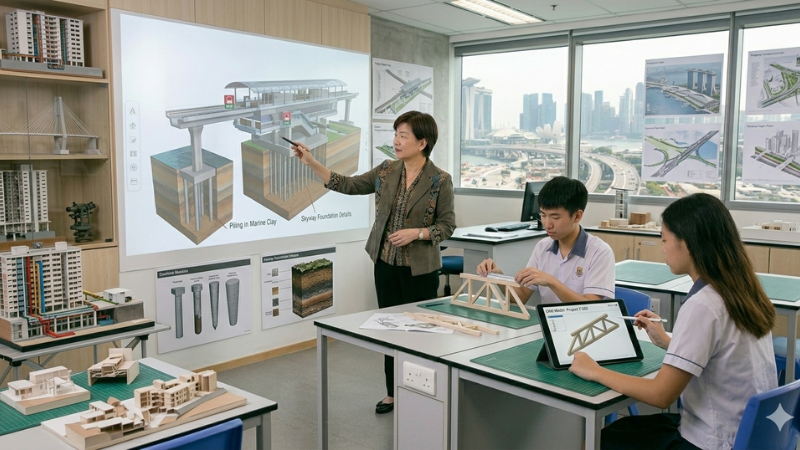
In addition to academic methods, the physical location of the learning process is important. Students can learn optimally only when they are comfortable asking questions and raising doubts. A positive environment allows curiosity and interest in the topic.
In GeoCafe, students are provided with a well-organised lesson that makes understanding complex ideas and achieving exam success easier. As a provider that offers Secondary Geography Tuition services, the focus remains on equipping learners with both strong content knowledge and effective answering strategies.
A combination of clarity, organisation, and motivation creates an atmosphere in which gradual change becomes possible.
Last Notes!
Passing in Geography exams at secondary level does not involve memorisation. The students not only need to know processes well but also apply case studies correctly, interpret data assuredly, and give their responses in a logical manner. These expectations may be overwhelming without being directed appropriately.
Through proper preparation and regular motivation. Students will be able to change their performance greatly. Secondary Geography Tuition provides the structured guidance and exam focused training necessary to build both competence and confidence.
Once students acquire proper backgrounds and perfected methods of answer passing the examinations is not a mere dream but a reality and achievable.